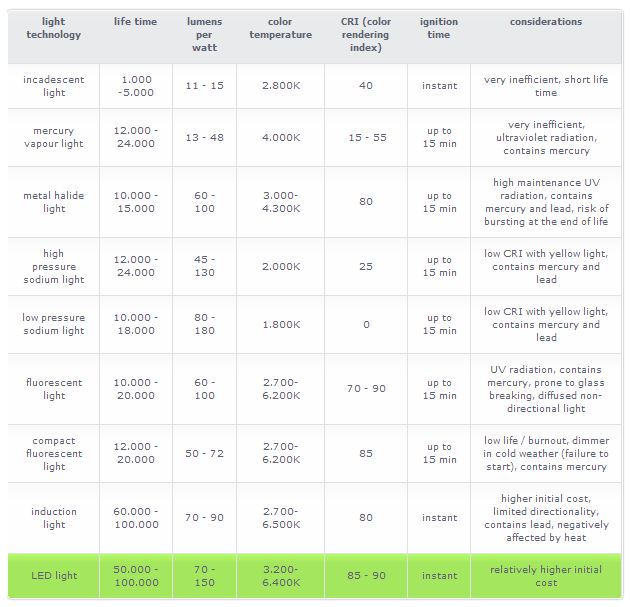
Last part of this project is LED bulb. LED will be used, to substitute conventional bulb, which is Sodium-vapor bulb. Sodium-vapor bulb produce yellowish light. LED has many advantages over Sodium-vapor lamp.
Picture above shown comparison between LED light (LEFT) and Sodium-vapor light (RIGHT). The LED light only consume 112W, while Sodium-vapor light consume 250W.
Friday, March 22, 2013
Saturday, March 16, 2013
Week 8 : Methodology Part 2 - Motion Detector
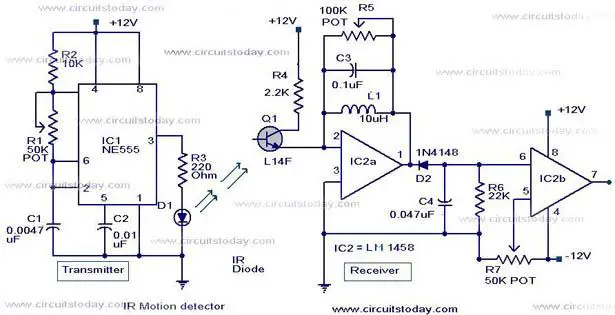
In this project, a motion detector circuit, will be used to detect the presence of the vehicle on the road. If there is a vehicle moving pass the motion detector circuit, it will trip the circuit and lamp will be switch on. The advantage of this circuit, it will prolong the lifespan of battery and lamp bulb. Imagine there is no vehicle using the road, electricity will be drawn from the battery to power up the lamp throughout the night. Although the electricity is free, which we get from sunlight, but we need to consider the battery and lamp bulb as well.
Picture above is a schematic diagram for infra-red motion detector circuit.
Friday, March 8, 2013
Week 7 : Methodology Part 1 - Charging System
My project will emphasize on 3 important parts, which is charging, motion detector and the lamp itself. Under charging parts, there are solar panel, charging controller and battery. The function of charging controller is to make sure, the battery will not be over-charged, when the battery is full. This is to make the lifespan of the battery longer.
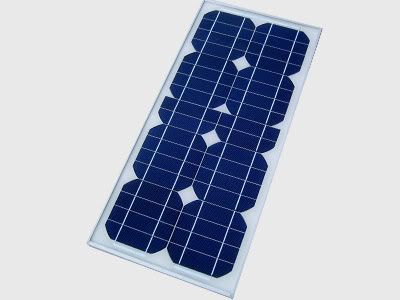
Picture above is the solar panel, which convert sunlight to electricity. When light strikes the solar cell, electrons are knocked loose from the atoms in the semiconductor material. If electrical conductors are attached to the positive and negative sides, forming an electrical circuit, the electrons can be captured in the form of an electric current, which is electricity. the electricity can be used to power a load.
Picture shown above is a schematic diagram of a solar charging controller. The function is to keep battery from overcharging. It regulates the voltage and current coming from the solar panels going to the battery. Most 12V panels, put out about 16-20V, so if there is no regulation, the battery will be damaged from overcharging. Most battery need around 14V to 14.5V to get fully charged.
Picture above is the solar panel, which convert sunlight to electricity. When light strikes the solar cell, electrons are knocked loose from the atoms in the semiconductor material. If electrical conductors are attached to the positive and negative sides, forming an electrical circuit, the electrons can be captured in the form of an electric current, which is electricity. the electricity can be used to power a load.
Picture shown above is a schematic diagram of a solar charging controller. The function is to keep battery from overcharging. It regulates the voltage and current coming from the solar panels going to the battery. Most 12V panels, put out about 16-20V, so if there is no regulation, the battery will be damaged from overcharging. Most battery need around 14V to 14.5V to get fully charged.
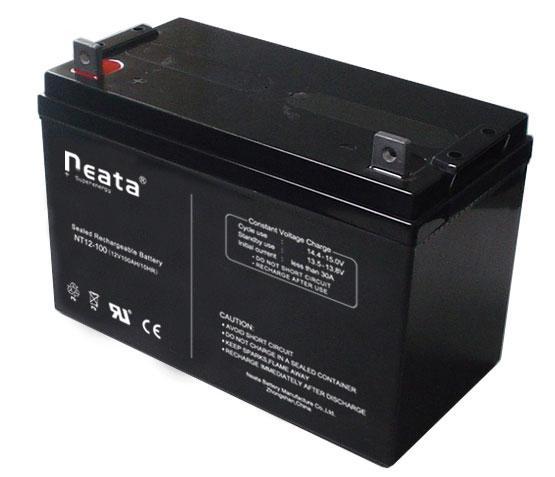
Picture shown above is a special battery for solar, which is a deep cycle battery. A deep-cycle battery is a lead-acid battery designed to be regularly deeply discharged using most of its capacity.
Friday, March 1, 2013
Week 6 : Aim & Objectives
The aim of this project is to design and develop an
intelligent solar-powered highway lamp post
The
objectives of this project are as follows:
· To
use solar energy as main source
· To
study on the motion detector circuit
· To
investigate the effect of using LED bulb
· To
design, build and test the charging circuit
Friday, February 22, 2013
Week 5 : Problem Statement
A problem statement in general is the description of an issues currently existing which needs to be addressed. It provides the context for the research study and generates the questions which the research aims to answer. The statement of the problem is the focal point of any research.
A conventional highway lamp post which produces a yellowish light is a sodium-vapor lamp. The power consumption of this type of lamp is more than 200W. To make thing worse, massive electricity wastage will happen, if there is no vehicle using the highway at night.
Safety of road users in rural area was the other concern. Properly lit up road will increase visibility of road users tremendously. But, it is difficult to put lamp post in rural area, due to remote location and located far from electrical power grid network. To make thing worse, roads in rural area are well-known for its bumpy and path-holes.
A conventional highway lamp post which produces a yellowish light is a sodium-vapor lamp. The power consumption of this type of lamp is more than 200W. To make thing worse, massive electricity wastage will happen, if there is no vehicle using the highway at night.
Friday, February 8, 2013
Week 4 : Introduction of the Project
For last decade, world had witness the increment of the of fossil fuel. This led to increase the price to produce electricity. Since that, many products which utilizes alternative sources to produce electricity has been develop. Located in the equator region, Malaysia receives an equal time of day and night throughout the year. It goes without saying that, solar energy is the best renewable energy to be used in Malaysia.
Intelligent Highway Lamp Post will be using solar energy as its main source to produce electricity. Solar panel or photovoltaic cell will transform sunlight into electricity. The electricity will be used to recharge the battery, which in turn, will be used to power up the lamp post at night. A motion detector circuit, will detect the presence of vehicle.
If there is a vehicle using the highway, motion detector circuit will send information to lamp post controller to switch on the lamp. By doing this, we could prolong the life of the bulb and the battery used.
Intelligent Highway Lamp Post will be using solar energy as its main source to produce electricity. Solar panel or photovoltaic cell will transform sunlight into electricity. The electricity will be used to recharge the battery, which in turn, will be used to power up the lamp post at night. A motion detector circuit, will detect the presence of vehicle.
If there is a vehicle using the highway, motion detector circuit will send information to lamp post controller to switch on the lamp. By doing this, we could prolong the life of the bulb and the battery used.
Friday, February 1, 2013
Week 3 : Project Inspiration - Intelligent Highway Lamp Post
The idea to do this project, came during the semester break, when I was travelling from my family house in Jitra, Kedah, to my village in Sik, Kedah. Sik is a small town, located in the rural area. After exit the PLUS highway at Gurun, I need to drive through 30KM of road, which most of the part of the road, is very bumpy and dark at night. This is due to road lamp posts are not a common sight along the road.
This is very dangerous, especially if travelling when it is raining at night. A conventional lamp post would be very hard to implement on the road, this is because the cost of electrical wiring would be high. Since there is only rubber tree along side the road, the nearest TNB sub-station is located at the town of Jeniang. Jeniang is located between Gurun and Sik.
Intelligent Highway Lamp Post would definitely solve this problem, since it does not require any electrical wiring from TNB. The lamp post would rely on Solar power as its main source of electricity.
Subscribe to:
Posts (Atom)